Viser innlegg med etiketten lyrikk. Vis alle innlegg

torsdag 25. september 2008

Synd, fordervelse, djevelskap & fortapelse

Jeg har i forbindelse med et knoklete prosjekt sett litt nærmere på Robert Southey (1774-1843) i det siste. Det er en fascinerende opplevelse, om ikke direkte litterært høyverdig. Hvilket aldri har pleid å plage meg.

Southey er den minst kjente av de tre mest kjente såkalte Lake Poets. Og etter å ha lest litt av ham, må jeg tilstå at jeg ikke er så veldig overrasket over at de to andre huskes bedre. Coleridge og Wordsworth mener jeg å huske at de het.

Anyway, mens jeg satt der og leste, kom jeg over dette sjarmante stykket litteratur om synd, fordervelse, djevelskap, skrekk og fortapelse. Og slikt kan man jo ikke annet enn dele med sine medmennesker ...

The Old Woman of Berkeley

The Raven croak'd as she sate at her meal,
And the Old Woman knew what he said,
And she grew pale at the Raven's tale,
And sicken'd and went to her bed.

'Now fetch me my children, and fetch them with speed,'
The Old Woman of Berkeley said,
'The Monk my son, and my daughter the Nun,
Bid them hasten or I shall be dead.'

The Monk her son, and her daughter the Nun,
Their way to Berkeley went,
And they have brought with pious thought
The holy sacrament.

The Old Woman shriek'd as they enter'd her door,
And she cried with a voice of despair,
'Now take away the sacrament,
For its presence I cannot bear!'

Her lip it trembled with agony,
The sweat ran down her brow,
'I have tortures in store for evermore,
But spare me, my children, now!'

Away they sent the sacrament,
The fit it left her weak,
She look's at her children with ghastly eyes,
And faintly struggled to speak.

'All kind of sin have I rioted in,
And the judgement now must be,
But I secured my children's souls,
Oh! pray, my children, for me!

'I have 'nointed myself with infant's fat,
The fiends have been my slaves,
From sleeping babes I have suck'd the breath,
And breaking by charms the sleep of death,
I have call'd the dead from their graves.

'And the Devil will fetch me now in fire,
My witchcrafts to atone;
And I who have troubled the dead man's grave
Shall never have rest in my own.

'Bless, I entreat, my winding sheet,
My children, I beg of you;
And with holy water sprinkle my shroud,
And sprinkle my coffin, too.

'And let me be chain'd in my coffin of stone,
And fasten it strong, I implore,
With iron bars, and with three chains,
Chain it to the church floor.

'And bless the chains and sprinkle them,
And let fifty Priests stand round,
Who night and day the mass may say
Where I lie on the ground.

'And see that fifty Choristers
Beside the bier attend me,
And day and night by the tapers' light,
With holy hymns defend me.

'Let the church bells all, both great and small,
Be toll'd by night and day,
To drive from thence the fiends who come
To bear my body away.

`And ever have the church door barr'd
After the even-song;
And I beseech you, children dear,
Let the bars and bolts be strong.

'And let this be three days and nights
My wretched corpse to save;
Till the fourth morning keep me safe,
And then I may rest in my grave.'

The Old Woman of Berkeley laid her down,
And her eyes grew deadly dim,
Short came her breath, and the struggle of death
Did loosen every limb.

They blest the old woman's winding sheet
With rites and prayers due,
With holy water they sprinkled her shroud,
And they sprinkled her coffin too.

And they chain'd her in her coffin of stone,
And with iron barr'd it down,
And in the church with three strong chains
The chain'd it to the ground.

And they blest the chains and sprinkled them,
And fifty Priests stood round,
By night and day the mass to say
Where she lay on the ground.

And fifty sacred Choristers
Beside the bier attend her,
Who day and night by the taper's light
Should with holy hymns defend her.

To see the Priests and Choristers
It was a goodly sight,
Each holding, as it were a staff,
A taper burning bright.

And the church bells all, both great and small,
Did toll so loud and long;
And they have barr'd the church door hard,
After the even-song.

And the first night the tapers' light
Burnt steadily and clear,
But they without a hideous rout
Of angry fiends could hear;

A hideous roar at the church door
Like a long thunder peal;
And the Priests they pray'd, and the Choristers sung
Louder in fearful zeal.

Loud toll'd the bell, the Priests pray'd well,
The tapers they burnt bright,
The Monk her son, and her daughter the Nun,
They told their beads all night.

The cock he crew, the Fiends they flew
From the voice of the morning away;
Then undisturb'd the Choristers sing,
And the fifty Priests they pray;
As they had sung and pray'd all night,
They pray'd and sung all day.

The second night the tapers' light
Burnt dismally and blue,
And every one saw his neighbour's face
Like a dead man's face to view.

And yells and cries without arise
That the stoutest heart might shock,
And a deafening roar like a cataract pouring
Over a mountain rock.

The Monk and Nun they told their beads
As fast as they could tell,
And aye as louder grew the noise
The faster went the bell.

Louder and louder the Choristers sung
As they trembled more and more,
And the Priests as they pray'd to heaven for aid,
They smote their breasts full sore.

The cock he crew, the Fiends they flew
From the voice of the morning away;
Then undisturb'd the Choristers sing,
And the fifty Priests they pray;
As they had sung and pray'd all night,
The pray'd and sung all day.

The third night came, and the tapers' flame
A frightful stench did make;
And they burnt as though they had been dipt
In the burning brimstone lake.

And the loud commotion, like the rushing of ocean,
Grew momently more and more;
And strokes as of a battering ram
Did shake the strong church door.

The bellmen, they for very fear
Could toll the bell no longer;
And still as louder grew the strokes
Their fear it grew the stronger.

The Monk and Nun forgot their beads,
They fell on the ground in dismay;
There was not a single Saint in heaven
To whom they did not pray.

And the Choristers' song, which late was so strong,
Falter'd with consternation,
For the church did rock as an earthquake shock
Uplifed its foundation.

And a sound was heard like the trumpet's blast,
That shall one day wake the dead;
The strong church door could bear no more,
And the bolts and the bars they fled;

And the tapers' light was extinguish'd quite,
And the Choristers faintly sung,
And the Priests dismay'd, panted and pray'd,
And on all the Saints in heaven for aid
They call'd with trembling tongue.

And in He came with eyes of flame,
The Devil to fetch the dead,
And all the church with his presence glow'd
Like a fiery furnace red.

He laid his hand on the iron chains,
And like flax they moulder'd asunder,
And the coffin lid, which was barr'd so firm,
He burst with his voice of thunder.

And he bade the Old Woman of Berkeley rise,
And come with her Master away;
A cold sweat started on that cold corpse,
At the voice she was forced to obey.

She rose on her feet in her winding sheet,
Her dead flesh quiver'd with fear,
And a groan like that which the Old Woman gave
Never did mortal hear.

She follow'd her Master to the church door,
There stood a black horse there;
His breath was red like furnace smoke,
His eyes like a meteor's glare.

The Devil he flung her on the horse,
And he leapt up before,
And away like the lightning's speed they went,
And she was seen no more.

They saw her no more, but her cries
For four miles round they could hear,
And children at rest at their mothers' breast
Started, and scream'd with fear.

søndag 28. oktober 2007

Rolling down the road

I serien reaksjonære katolikker med poetisk teft, er turen nok en gang kommet til selveste Gilbert, den uforlignelige G.K. Chesterton, med en meditasjon over den engelske folkesjel.

The Rolling English Road
Before the Roman came to Rye or out to Severn strode,
The rolling English drunkard made the rolling English road.
A reeling road, a rolling road, that rambles round the shire,
And after him the parson ran, the sexton and the squire;
A merry road, a mazy road, and such as we did tread
The night we went to Birmingham by way of Beachy Head.

I knew no harm of Bonaparte and plenty of the Squire,
And for to fight the Frenchman I did not much desire;
But I did bash their baggonets because they came arrayed
To straighten out the crooked road an English drunkard made,
Where you and I went down the lane with ale-mugs in our hands,
The night we went to Glastonbury by way of Goodwin Sands.

His sins they were forgiven him; or why do flowers run
Behind him; and the hedges all strengthening in the sun?
The wild thing went from left to right and knew not which was which,
But the wild rose was above him when they found him in the ditch.
God pardon us, nor harden us; we did not see so clear
The night we went to Bannockburn by way of Brighton Pier.

My friends, we will not go again or ape an ancient rage,
Or stretch the folly of our youth to be the shame of age,
But walk with clearer eyes and ears this path that wandereth,
And see undrugged in evening light the decent inn of death;
For there is good news yet to hear and fine things to be seen,
Before we go to Paradise by way of Kensal Green.

mandag 22. oktober 2007

Om å slamre med dører

Her i selskapet strever vi nåtildags litt med å hjelpe vår gode venn Arnfinn Pettersen med hans blog Den Tvilsomme Humanist. Derfor skjer ting langsommere enn det burde i de utdøddes rike. Men, men, slikt skjer. Og i mellomtiden kan dere verdsette et stykke lærdom fra den lærde Hilaire Bellocs penn:

Rebecca

Who Slammed Doors For Fun And Perished Miserably

A trick that everyone abhors
In little girls is slamming doors.
A wealthy banker's little daughter
Who lived in Palace Green, Bayswater
(By name Rebecca Offendort),
Was given to this furious sport.

She would deliberately go
And slam the door like billy-o!
To make her uncle Jacob start.
She was not really bad at heart,
But only rather rude and wild;
She was an aggravating child...

It happened that a marble bust
Of Abraham was standing just
Above the door this little lamb
Had carefully prepared to slam,
And down it came! It knocked her flat!
It laid her out! She looked like that.

Her funeral sermon (which was long
And followed by a sacred song)
Mentioned her virtues, it is true,
But dwelt upon her vices too,
And showed the deadful end of one
Who goes and slams the door for fun.

The children who were brought to hear
The awful tale from far and near
Were much impressed, and inly swore
They never more would slam the door,
– As often they had done before.

fredag 7. september 2007

Alas, alas for England

Jevnlige besøk på Dekodet (noe dere andre også burde avlegge), har minnet Deerstalker om at han har viet så altfor lite tid til Chesterton. Hvilket er svært, svært urimelig, tatt i betraktning at Chestertorn er en gigant på feltet der Dronten kun har stukket inn en (utdødd) tåspiss. Uretten rettes herved bittelitt opp.

Deerstalker vil forøvrig på det sterkeste understreke at angjeldende dikt på ingen måte er valgt med tanke på for eksempel foregående post. Helt sikkert.

Elegy in a Country Churchyard
The men that worked for England
They have their graves at home:
And birds and bees of England
About the cross can roam.

But they that fought for England,
Following a falling star,
Alas, alas for England
They have their graves afar.

And they that rule in England,
In stately conclave met,
Alas, alas for England
They have no graves as yet.

onsdag 29. august 2007

Høst

Så er den da altså endelig her, høsten. Sommeren, med sine varme, tørre gleder er passert (et ganske annet sted) og den beste av årstider er i ferd med å trykke oss inn i sin avkjølende favn. (Våtere kan den neppe bli.) Da er tiden inne for litt poesi, nærmere bestemt en leksjon i de flyktige gleders forbannelse, ved en mann som burde vite hva han snakket om, John Keats.

In Drear-nighted December
In drear-nighted December,
Too happy, happy tree,
Thy branches ne'er remember
Their green felicity:
The north cannot undo them
With a sleety whistle through them;
Nor frozen thawings glue them
From budding at the prime.

In drear-nighted December,
Too happy, happy brook,
Thy bubblings ne'er remember
Apollo's summer look;
But with a sweet forgetting,
They stay their crystal fretting,
Never, never petting
About the frozen time.

Ah! would 'twere so with many
A gentle girl and boy!
But were there ever any
Writhed not at passed joy?
The feel of not to feel it,
When there is none to heal it
Nor numbed sense to steel it,
Was never said in rhyme.

tirsdag 12. juni 2007

Poetiske betraktninger

Franklin P. Adams (1881 - 1960) spekulerer rundt poesiens viderverdigheter:

Us Potes
Swift was sweet on Stella;
Poe had his Lenore;
Burns' fancy turned to Nancy
And a dozen more.

Poe was quite a trifler;
Goldsmith was a case;
Byron'd flirt with any skirt
From Liverpool to Thrace.

Sheridan philandered;
Shelley, Keats, and Moore
All were there with some affair
Far from lit'rachoor.

Fickle is the heart of
Each immortal bard.
Mine alone is made of stone-
Gotta work too hard.

torsdag 31. mai 2007

All in vain

Dronten har, til å være sitt nebbete seg, vært påtagelig poesiløs den siste tiden. Det rettes herved opp med et stykke lyrikk fra Christina Rossettis fjærpenn, som på dystert vis gjenspeiler den nebbetes sinnsstemning.

De Profundis
Oh why is heaven built so far,
Oh why is earth set so remote?
I cannot reach the nearest star
That hangs afloat.

I would not care to reach the moon,
One round monotonous of change;
Yet even she repeats her tune
Beyond my range.

I never watch the scatter'd fire
Of stars, or sun's far-trailing train,
But all my heart is one desire,
And all in vain:

For I am bound with fleshly bands,
Joy, beauty, lie beyond my scope;
I strain my heart, I stretch my hands,
And catch at hope.

tirsdag 8. mai 2007

Dyre vaner og dodoer

Blant Deerstalkers dyrere vaner er et medlemskap i The Folio Society, som innebærer at huset langsomt fylles opp av lekre utgaver av klassisk litteratur, nydelig designet og bundet og med egne kassetter til oppevaring. (Har noen et godt norsk ord for slip-case?)

Denne gang trengte Deerstalker bare å kjøpe tre bøker for å få, aldeles gratis, samtlige tre bind av Nortons annoterte utgave av Sherlock Holmes samlede, som den øreklaffede har siklet etter siden den ble utgitt. Så en ny utgave av Bellocs Cautionary Tales er i hus, til Dodofruens store fortvilelse. (Hun blir offer for høytlesninger.)

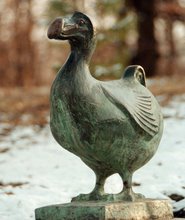
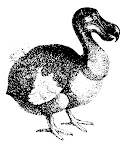
Og dermed ble Deerstalker minnet om at Belloc jo faktisk har viet dodoen et dikt. Et riktig trist et er det også:

The Dodo
The dodo used to walk around,
And take the sun and air.
The sun yet warms his native ground–
The Dodo is not there!

The voice which used to squawk and squeak
Is now for ever dumb–
Yet may you see his bones and beak
All in the Mu-se-um.

onsdag 2. mai 2007

Frosk, til almen forlystelse

Deerstalker er ikke aldeles frisk og trøster seg med fjollete lyrikk. Og hva er vel da bedre enn Hilaire Belloc?

The Frog
Be kind and tender to the Frog,
And do not call him names,
As "Slimy skin," or "Polly-wog,"
Or likewise "Ugly James,"
Or "Gap-a-grin," or "Toad-gone-wrong,
"Or "Bill Bandy-knees":
The Frog is justly sensitive
To epithets like these.

No animal will more repay
A treatment kind and fair;
At least so lonely people say
Who keep a frog (and, by the way,
They are extremely rare).

torsdag 29. mars 2007

Satires of Cirumstance, nr 10

Dronten har tidligere sluppet til Thomas Hardy med en av hans Satires of Circumstance in Fifteen Glimpses fra 1914. Her er en annen, stadig like ondsinnet.

X. In the Nupital Chamber
'O that mastering tune!' And up in the bed
Like a lace-robed phantom springs the bride;
'And why?' asks the man she had that day wed,
With a start, as the band plays on outside.
'It's the townsfolk's cheery compliment
Because of our marriage, my Innocent.'

'O but you don't know! 'Tis the passionate air
To which my old Love waltzed with me,
And I swore as we spun that none should share
My home, my kisses, till death, save he!
And he dominates me and thrills me through,
And it's he I embrace while embracing you!'

mandag 19. mars 2007

Satires of Circumstance

Det er lenge siden Dronten har sluppet til Thomas Hardy her i sin lille krok av kyberrommet. Her er han dog tilbake, på sitt aller mest ondsinnede.

Noe av det mest fascinerende med Hardy er hvilken glede han hadde av å utsette sine skikkelser for de grusomste skjebner eller den grimmeste latterliggjøring. Som for eksempel i de femten Satires of Circumstance in Fifteen Glimpses fra 1914. Her er den første av dem:

I. At Tea
The kettle descants in a cosy drone,
And the young wife looks in her husband's face,
And then in her guest's, and shows in her own
Her sense that she fills an envied place;
And the visiting lady is all abloom,
And says there was never so sweet a room.

And the happy young housewife does not know
That the woman beside her was his first choice,
Till the fates ordained it could not be so ...
Betraying nothing in look or voice
The guest sits smiling and sips her tea,
And he throws her a stray glance yearningly.
 
Site Meter